
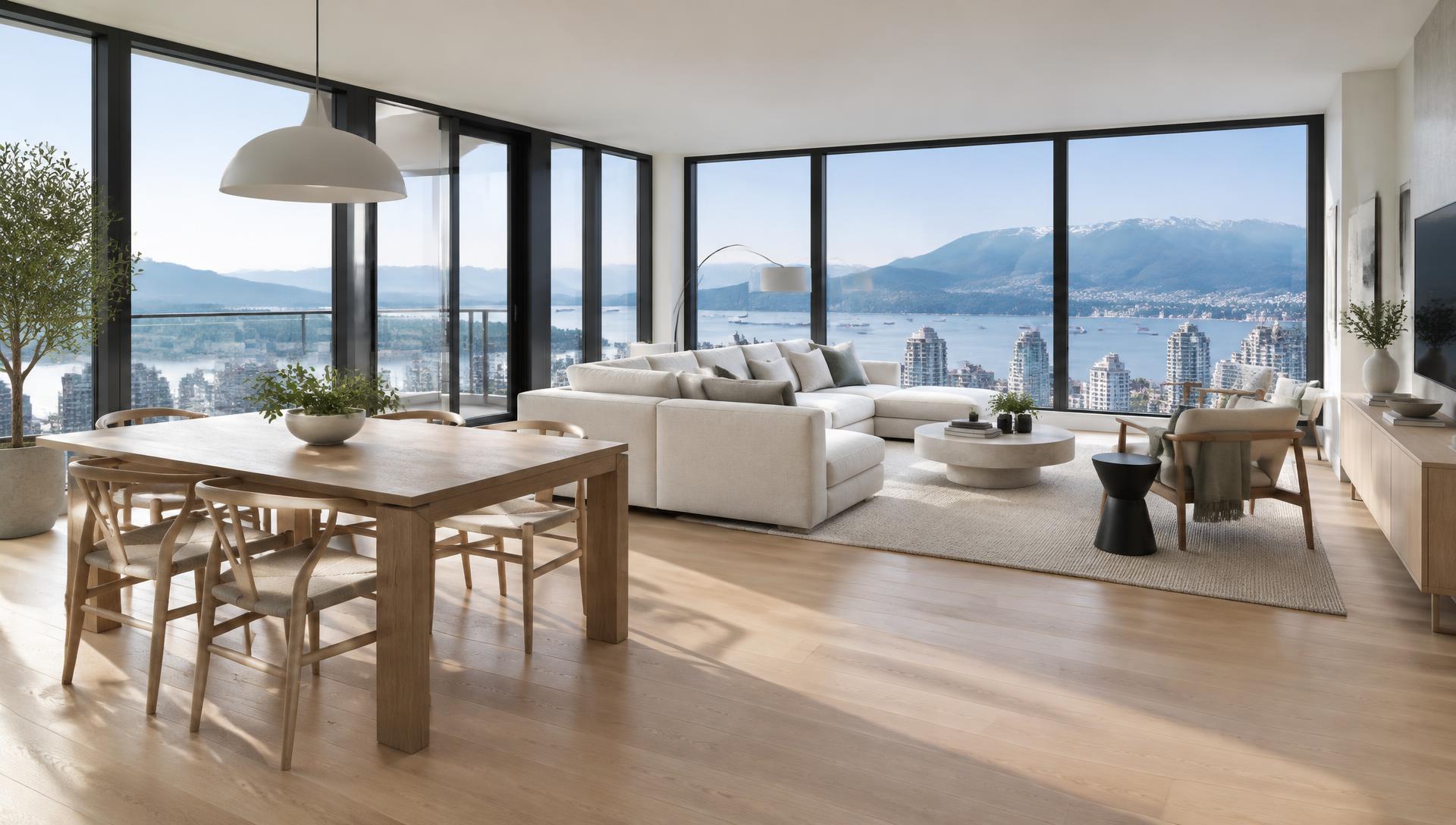
Buying with Aivea
Buying a Home in Greater Vancouver
Your first home, more room to grow, or a fresh start — I'll help you find what fits, from our first conversation to the day you get your keys.
Together, step by step
My buying process
You don't have to have it all figured out. Here's how we'll take the next step together.
- 1
Consult
We'll talk about your plans, budget, timing and the places you could see yourself calling home.
- 2
Pre-approval
Connect with a lender or mortgage broker to understand your comfortable budget before we start looking.
- 3
Tours
I'll find and tour homes with you, compare the options, and help you see beyond the listing photos.
- 4
Offer
We'll build your offer, negotiate, and work through financing, inspections, subjects and rescission dates.
- 5
Closing
I'll help coordinate the final details with your lawyer or notary and be there through possession day.
Your first home? Start here.
Leave breathing room in your budget.
Plan for closing costs, moving and the ongoing costs of owning — not just the down payment and mortgage.Check the help available to you.
Ask your lender about the FHSA and RRSP Home Buyers' Plan, and your lawyer or notary about first-time buyer tax exemptions.Make space for due diligence.
Financing, inspections and strata documents matter. I'll explain your subjects and rescission dates before you commit.
Let's start with you
Tell me about your next home.
Share what you're looking for, even if you're still figuring it out. I'll help you find a starting point that feels right for you.
After we chat, I'll email you my buyer's guide to keep close as you plan your move.
— Aivea
Your path to home ownership
Start with a conversation
Before we look at a single listing, we'll talk about what home means to you: the neighbourhoods you love, your commute, schools, space for a home office, and which type of home fits your life: a condo, townhouse, duplex, detached house, or a presale / brand-new home.
Greater Vancouver is many markets in one. Vancouver's West Side and East Side, Burnaby, Richmond, the North Shore, New Westminster, the Tri-Cities, Surrey and Langley all move differently, and I'll help you compare them.
Get pre-approved for a mortgage
A pre-approval from a lender or mortgage broker tells you what you can comfortably spend and shows sellers you're serious. Banks and other federally regulated lenders apply the mortgage stress test, which means qualifying at the higher of 5.25% or your contract rate plus 2%.
- Minimum down payment: 5% of the first $500,000, and 10% of the portion between $500,000 and $1.5 million.
- Homes priced at $1.5 million or more need at least 20% down.
- With less than 20% down, you'll pay for mortgage default insurance, which is added to your mortgage.
- First-time buyers can often use a First Home Savings Account (FHSA) and the RRSP Home Buyers' Plan toward their down payment.
Aivea's tip
Get pre-approved before you start viewing. In a busy market, homes can sell within days.
Plan for closing costs
On top of your down payment, set aside money for closing costs. Property transfer tax is usually the biggest one. A good rule of thumb is to budget an extra 1.5% to 4% of the purchase price. See the full breakdown below.
Tour homes and do your homework
I'll set up searches, book showings and point out what photos don't show: layout, light, noise, renovations and how the home compares with recent sales nearby.
Looking at a detached home or duplex? We'll check the lot, zoning, permits and any renovations, and book a home inspection. For a duplex, we'll also look at the strata or co-ownership setup and any shared-wall agreements.
Considering a presale or new home? We'll review the developer's disclosure statement, deposit schedule, estimated completion date, assignment rules and the 2-5-10 home warranty, and remember there's a 7-day rescission period on BC presale contracts.
Buying a condo or townhouse? Before you commit, we'll review the strata documents:
- Form B Information Certificate (strata fees, special levies, rental and pet rules)
- At least two years of strata council and AGM minutes
- The depreciation report and contingency reserve fund balance
- Bylaws, financial statements and the building's insurance deductibles
Make an offer
Your offer is written on a Contract of Purchase and Sale. Besides the price, it sets out:
- The deposit, often around 5% of the price, usually paid within 24 hours of acceptance or subject removal
- Subjects (conditions) such as financing, a home inspection, strata documents and insurance
- The completion, possession and adjustment dates
- What's included, like appliances, window coverings and light fixtures
In multiple-offer situations, we'll talk through your strategy so you can compete without taking on risk you're not comfortable with.
Your 3-business-day rescission period
For eligible BC residential purchases, the home buyer rescission period gives you three business days after acceptance to cancel for any reason. Exercising this right means paying the seller 0.25% of the purchase price, and the right cannot be waived. Exemptions apply, and presales covered by developer disclosure rules have a separate rescission right.
This is not your subject-removal period. Financing, inspection and document-review subjects have deadlines negotiated in your contract. The rescission period runs alongside those deadlines, not after subject removal. I’ll explain both dates before you commit.
BC Financial Services Authority: rescission rules and exemptions
Remove subjects
We work through financing, inspections and document review before your negotiated subject-removal deadline. Once you’re satisfied, subjects are removed in writing. The purchase is firm once subjects are removed and any applicable rescission period has expired. Your contract sets when the deposit is due; it is held in the brokerage’s trust account.
Completion and moving in
Your lawyer or notary prepares the paperwork, collects the rest of your down payment, and registers the home in your name at the Land Title Office on completion day. You usually get the keys on the possession date, often the day after completion.
After you move in, remember to claim the BC Home Owner Grant on your property tax notice, and make the yearly Speculation and Vacancy Tax declaration (plus the Empty Homes Tax declaration if you live in the City of Vancouver).
Aivea's tip
I'll stay in touch after you move in, for questions, trades referrals, or whenever you're thinking about your next move.
Closing costs to budget for
These are paid on top of your down payment. Typical amounts as of 2026:
- Property transfer tax
- 1% on the first $200,000, 2% up to $2 million, 3% up to $3 million, and 5% on the residential portion above $3 million. Paid on completion day.
- First-time buyer exemption
- If you qualify, you can save up to $8,000 on property transfer tax on homes up to $835,000, with a partial exemption up to $860,000. Newly built homes have a separate exemption up to $1.1 million, with a partial exemption up to $1.15 million.
- GST on new homes
- 5% on newly built or substantially renovated homes. Some buyers qualify for rebates, so ask me.
- Legal or notary fees
- Often about $1,200 to $2,000, plus disbursements such as title search and registration fees.
- Home inspection
- Often about $500 to $800, depending on the size and type of home.
- Adjustments
- Your share of property taxes, strata fees and utilities the seller has already prepaid.
- Insurance and moving
- Home insurance must be in place for completion. Don't forget movers and utility hookups.
Not a Canadian citizen or permanent resident?
Federal rules currently restrict most non-Canadians from buying residential property, and an additional 20% property transfer tax applies to foreign buyers in Greater Vancouver. There are exceptions, so let's talk before you start your search.
This guide is general information for Greater Vancouver, not legal, tax or financial advice. Taxes, exemptions and lending rules change, so confirm the details for your situation with your lawyer or notary, accountant and lender. Figures were last reviewed in 2026.
Ready to start your home search?
Tell me what you're looking for, and I'll put together a plan, from pre-approval to possession day.
Let's talk